The Capybara – The giant of the savanna…
10 de September de 2026
It is the largest rodent on Earth. These impressive semi-aquatic mammals inhabit much of northern and central South America, although a small invasive population has been spotted in Florida. They are closely related to guinea pigs and are more distantly related to chinchillas.
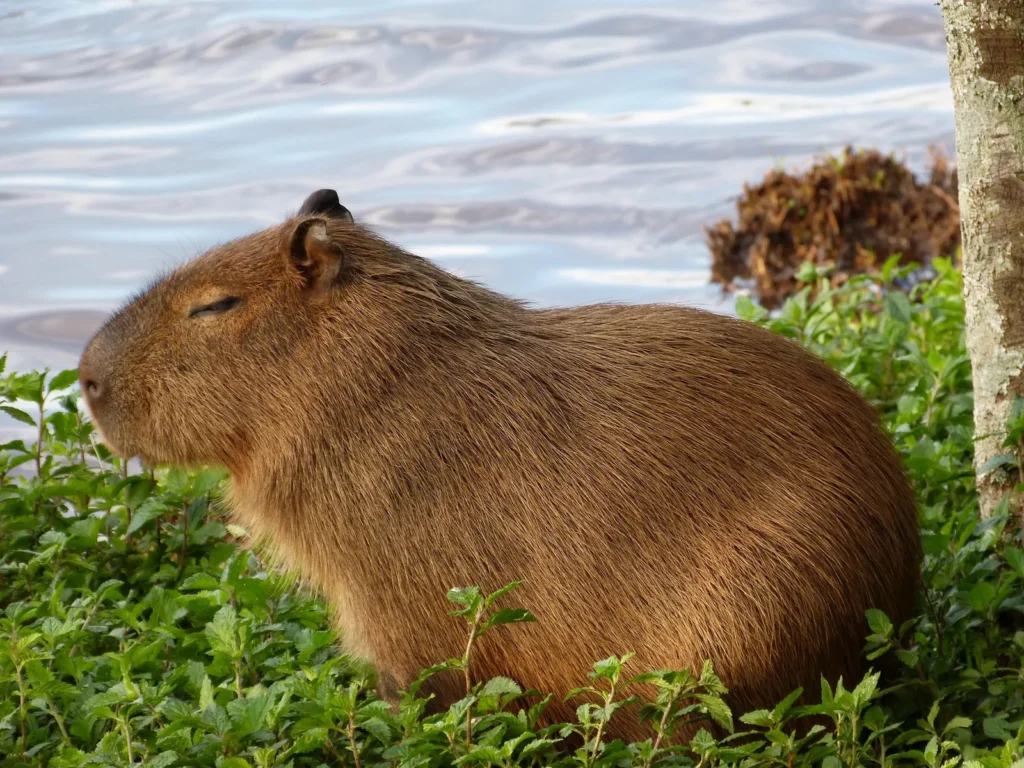
Getting to know them better…
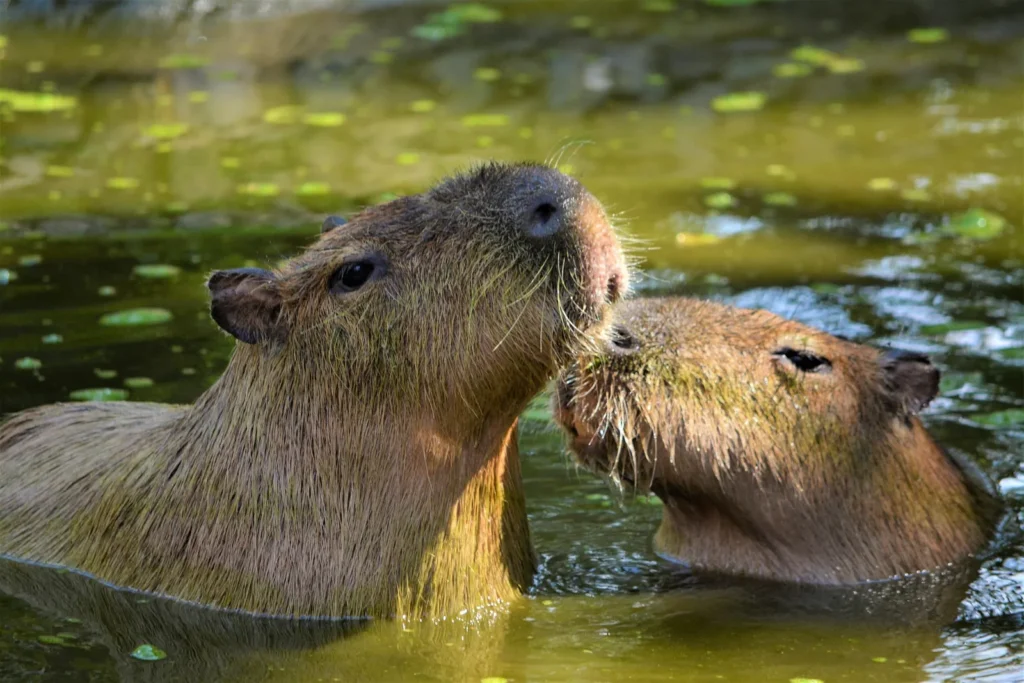
Like beavers, capybaras are excellent swimmers. Their bodies, simimlar in shape to those of pigs, are adapted for life in bodies of water found in forests, seasonally flooded savannas, and wetlands. They have partially webbed toes that help them move through the water, and their fur – which ranges from reddish to dark brown – is long and brittle, ideal for drying quickly when they come ashore. Their eyes, nose and ears (the latter being hairless) are located on the top of their heads, allowing their faces to remain exposed and alert while most of their bodies remain submerged.
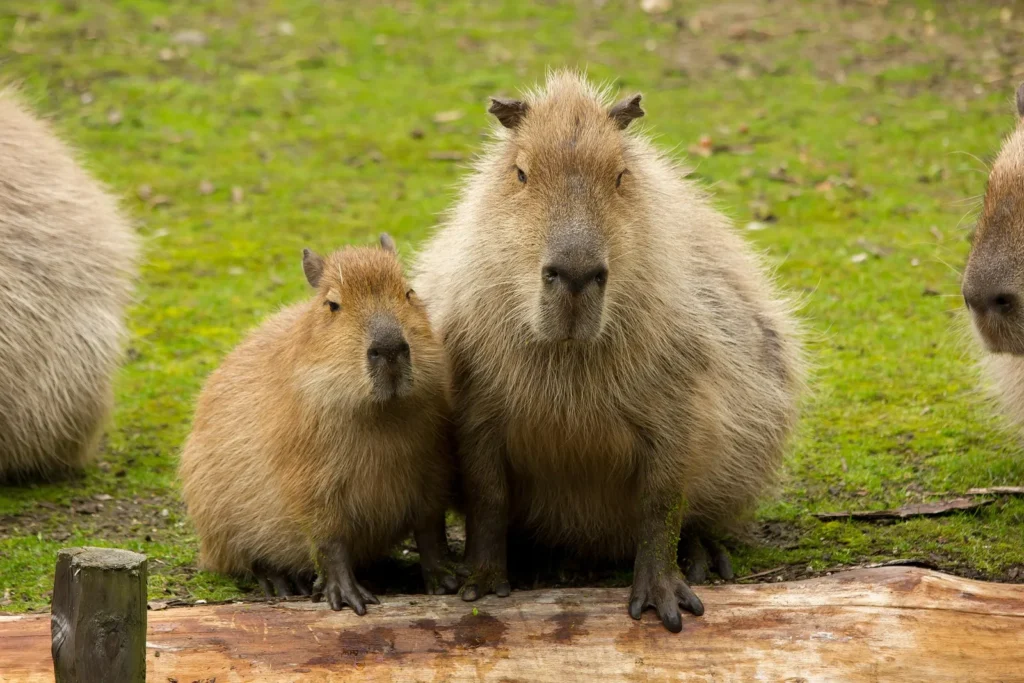
Always on alert!
Capybaras don’t mind being alone, but they also live in groups of up to 40 individuals. Their breeding season varies throughout the year depending on their habitat and the availability of mates. Females typically give birth to a litter of four to five young per year.
Unusual diet
They eat their own feces in the morning. That is when their feces are rich in protein, thanks to the large number of microbes they have digested from the previous day’s food. Since the grasses they eat are difficult to digest, eating their feces essentially allows them to digest them twice.
Also, like other rodents, capybaras’ teeth grow continuously and wear down as they graze on aquatic plants, grasses and other abundant vegetation.